Physical Address
1 Riverwood Drive
Moncks Corner, SC 29461
Physical Address
1 Riverwood Drive
Moncks Corner, SC 29461

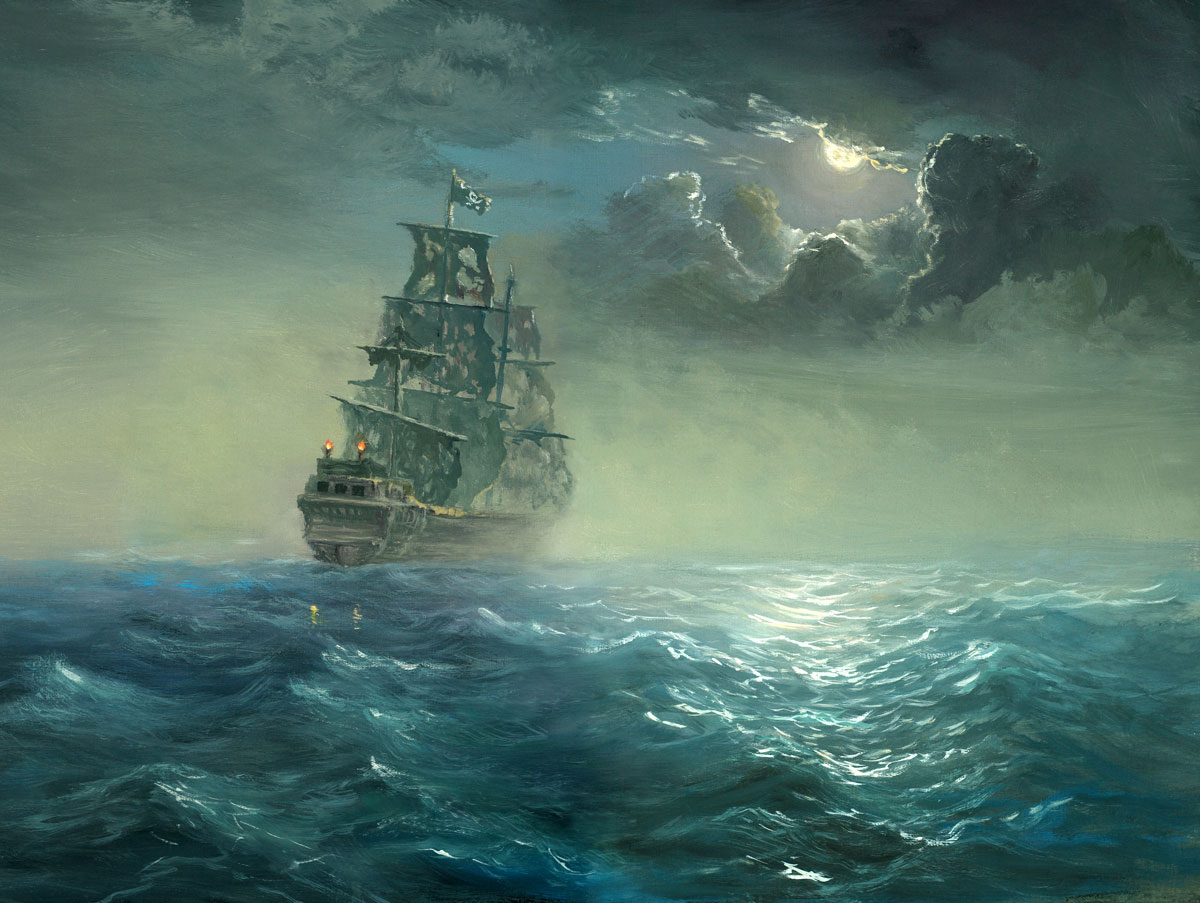
The year is 1718. Imagine yourself as an English traveler catching passage aboard a wooden merchant vessel sailing toward Charleston, South Carolina, in search of colonial opportunity. The morning air is thick with Southern humidity, and the ocean stretches vast and empty beyond your view.
Suddenly, a crewmate points nervously into the rolling sea fog. “What is that?” he whispers.
At first, it seems like nothing but a shapeless shadow riding the horizon. But as you peer closer, a dark silhouette emerges from the mist, growing larger by the second.
“Ahoy! There’s a ship out yonder!” calls the lookout from the masthead, scanning the water through his telescope. The crew rushes to the deck railing. The mysterious ship is moving faster than any vessel you have ever seen, cutting swiftly and daringly over the swells – and sailing directly in your ship’s path.
“All hands-on deck!” the captain bellows. “Stay to your stations! Gunner, get the cannons ready.”
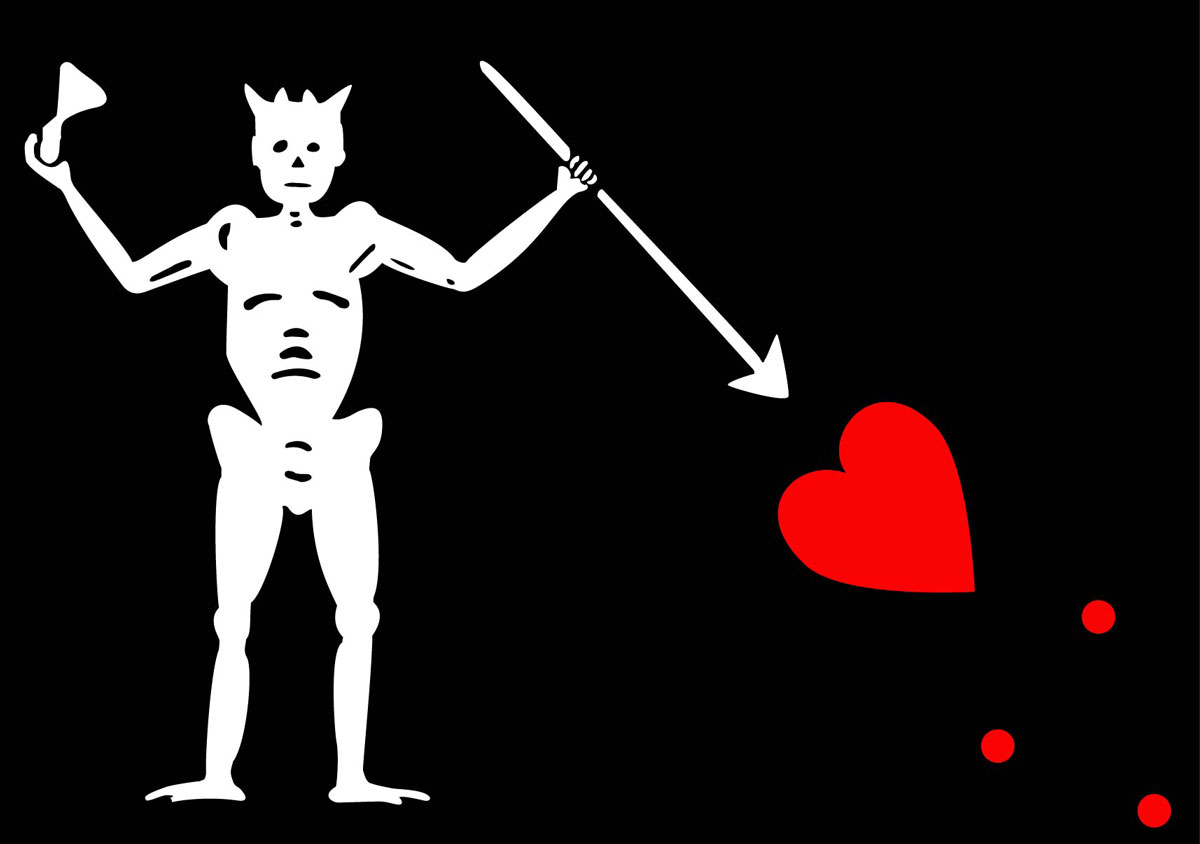
Sailors scramble in a panic as the dark ship draws near. Through the haze, you watch the opposing crew run about their deck as they hoist a flag to the top of their mast. It is not the banner of any recognized nation, but a Jolly Roger. The skull and crossbones seem to grin at your crew, while a depicted bleeding heart and a dagger deliver a universal pirate message: surrender without resistance or face a violent end.
During the seventeenth and eighteenth centuries, this terrifying encounter was a very real danger. The Carolina coast was a notorious hub for piracy, serving as both a hunting ground and a sanctuary for some of the most feared outlaws in maritime history.
Haven of the Southern Coast
To understand why piracy flourished along the Grand Strand, one must look to the geography of the early American colonies. Charleston operated as the busiest colonial port in the South, serving as a vital trade center where merchant ships arrived laden with gold, silver, spices, silks and ship-building materials. This concentration of wealthy, slow-moving targets made the shipping lanes incredibly attractive to raiders.
But while Charleston was the primary target, the surrounding region provided the perfect infrastructure for a pirate’s lifestyle. Further north, Winyah Bay in Georgetown County offered an ideal refuge. The Waccamaw, Pee Dee, Black and Sampit rivers all flow into this bay, creating a labyrinth of hidden channels, secluded beaches and tidal creeks.
For ordinary merchant captains, Winyah Bay was hazardous. To access the deep, calm waters of the bay, ships had to navigate a treacherous, shifting sandbar. “Some ships had to wait for high tide to get over the bar, and some would become grounded and have to wait for the tide to lift them off,” notes Justin McIntyre, Curator at the South Carolina Maritime Museum in Georgetown.
However, what was a hazard for merchants was a shield for pirates. Operating shallower, highly maneuverable vessels, pirates easily crossed the sandbars to evade heavily armed Royal Navy warships. In these marshes, they could careen their hulls, gather fresh water and wait in ambush. It is a striking contrast to think that today, Winyah Generating Station sits near these very same quiet bends where outlaws once hid their black-sailed sloops.
The Pedigree of Piracy
The men who sailed under the Jolly Roger were a diverse, often desperate collective, but they were bound by a common identity: they were experienced seamen. Most outlaws transitioned into the “brotherhood” of piracy from three distinct maritime backgrounds.
Privateers were crew members on armed vessels commissioned by their governments to raid enemy shipping during times of war. Unlike pirates, privateers operated under a “Letter of Marque,” making their raids legal and even patriotic. However, the line between privateering and piracy was incredibly thin. When the War of the Spanish Succession ended in 1714, thousands of privateers suddenly found themselves unemployed. Unwilling to return to low-paying land work, many chose to ignore the peace treaties and continue their raiding lifestyles, turning their weapons against any flag that crossed their path.
Merchant mariners were former merchant sailors who joined the outlaws voluntarily. Life aboard colonial merchant ships was notoriously brutal, characterized by rotting food, meager wages, rampant disease and tyrannical captains. When pirates captured a merchant vessel, they routinely offered the crew a choice: join the brotherhood or be set adrift. For many sailors, the democratic structure of a pirate crew – where captains were elected and spoils were divided equally – offered a far more appealing life.
Buccaneers were a unique group of early Caribbean outlaws. Originating in the mid-1600s, they were a mix of French hunters, religious exiles and escaped servants who lived on the wild islands of Hispaniola and Tortuga. The natives taught them how to cure the meat of wild cattle over a smoky wooden grate called a boucan, earning them their name. When Spanish authorities tried to drive them off, the buccaneers took to the sea in small boats, launching savage raids against Spanish shipping and eventually blending into the golden age of pirate fleets.
The Secret Origins of Edward Beard
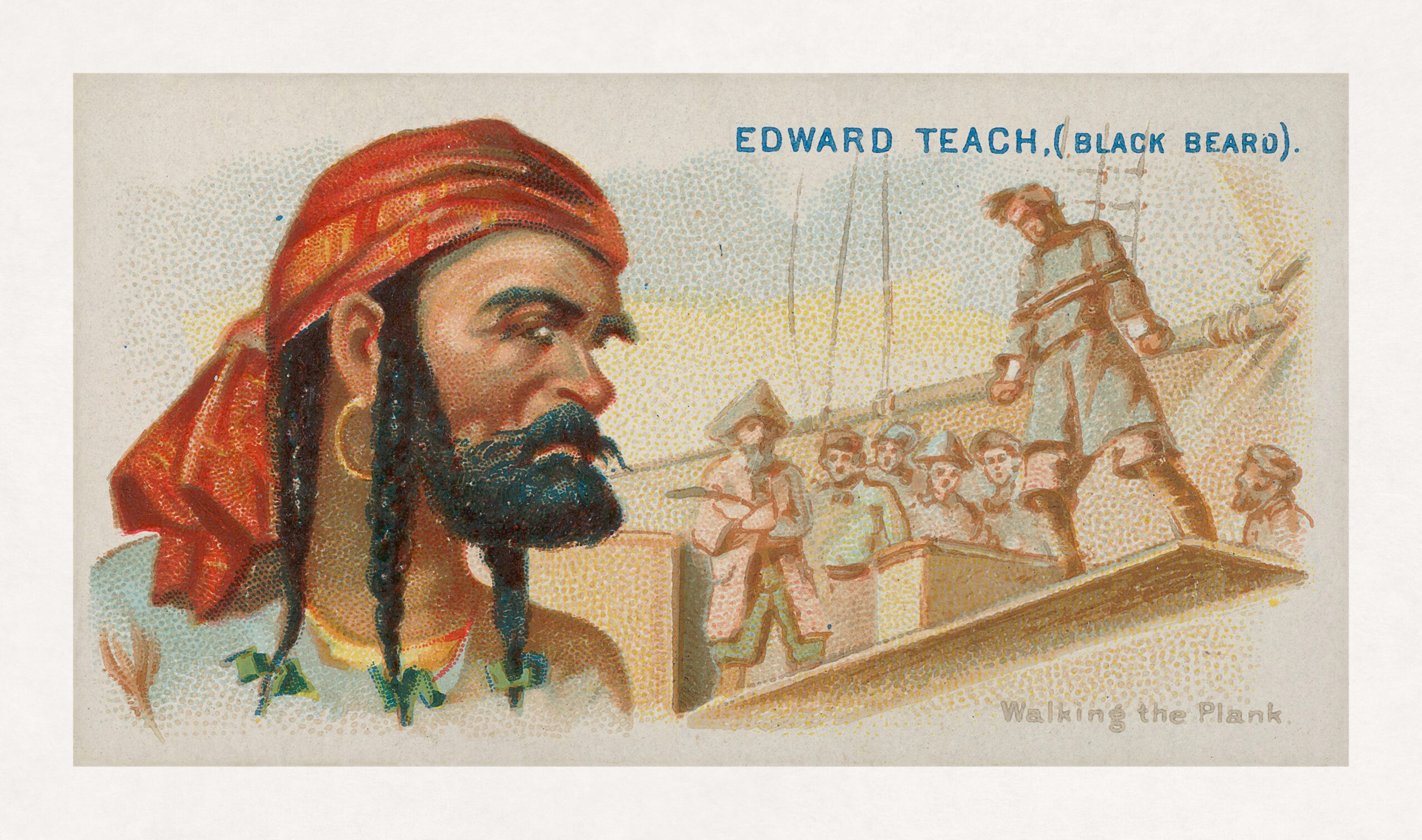
For centuries, standard history books have claimed that the pirate captain known as Blackbeard, born Edward Teach, Thatch, or Drummond, began his life in Bristol, England, around 1690. But groundbreaking local research tells a very different story.
Dr. Michael Heitzler, an educator and the former mayor of Goose Creek, South Carolina, for forty years, has meticulously analyzed historical court documents, land grants and census returns. His research reveals that Blackbeard was not an English transplant but was actually “born and reared” right in Goose Creek, Berkeley County, South Carolina. Furthermore, Heitzler’s findings indicate the pirate’s true legal name was Edward Beard.
According to these records, Edward’s parents, James Beard Sr. and Margaret Beard, emigrated from Barbados to South Carolina around 1680 with James’ brother, Matthew. The brothers acquired land along the Santee River, where Matthew operated a ferry service, while Edward’s parents settled on a plantation along the Back River.
Growing up as the youngest of three brothers, Edward worked hard on the family plantation. He spent his youth transporting cargo via canoes and shallow boats along the winding river and even helped build a mile-long transport canal. This demanding physical labor built Edward’s immense strength and gave him an intimate, expert knowledge of the complex Carolina marshes, creeks and waterways – skills that would later make him a master navigator of escape routes.
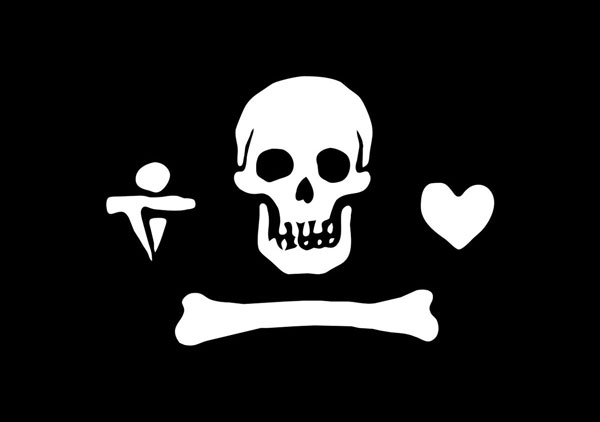
While modern pirate lore often attributes more elaborate flag designs to infamous pirates, little physical evidence from the golden age of piracy exists. A solid black or red flag, or a white skull on a black flag, was more likely the visual that greeted ships under attack.
Edward’s father also modeled the “legal” violence of privateering to his sons. When Edward was 12, his father armed his sailboat, The James, and joined a fleet under Governor James Moore Sr. to attack the Spanish at St. Augustine, Florida. Though the military mission failed, James Beard Sr. plundered Spanish holdings and returned to the Back River with pockets full of silver. James Sr. continued to privateer, bringing his eldest son on missions.
Years later, the Moore family secured land in North Carolina and promoted Edward’s father to Captain. At age 22, Edward accompanied his father to Bath, North Carolina, to clear the new land. Surrounded by Goose Creek planters who traded illicitly with outlaws, Edward armed his father’s ship and ventured full-time into piracy. To protect his respectable South Carolina family from legal and social ruin, Edward adopted the alias “Edward Teach.”
A Reign of Terror: The Queen Anne’s Revenge
Operating under his alias, Edward Teach joined the crew of the famous pirate captain Benjamin Hornigold. Teach quickly proved himself a formidable leader, and when their crew captured a large French slave ship called the Concord, Hornigold gave Teach command of the vessel. Teach added 40 cannons, increased his crew to 300 men, and renamed the warship the Queen Anne’s Revenge.
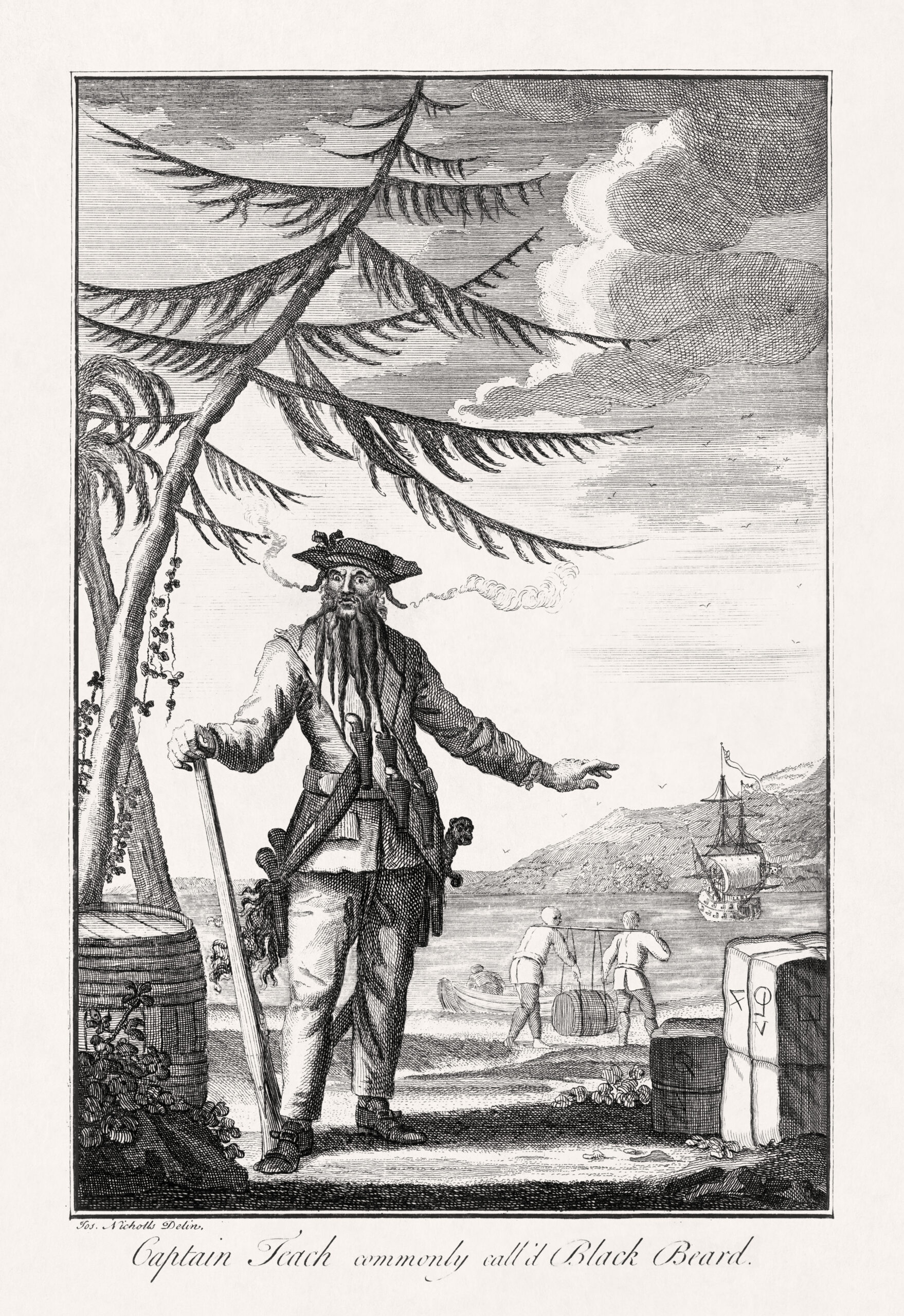
Teach understood that fear was his most powerful weapon. To craft his terrifying “Blackbeard” persona, he grew his thick, jet-black hair and beard extremely long, braiding them with colorful ribbons. Before boarding a captured vessel, he strapped multiple pistols and cutlasses across his chest. Most famously, he would tuck slow-burning hemp fuses beneath his hat, letting the sputtering sparks and thick black smoke wreathe his face, making him look like a demon rising from the depths of hell.
In May 1718, Blackbeard carried out his most daring exploit. Partnering with Stede Bonnet, a wealthy former army major from Barbados known as the “Gentleman Pirate,” Blackbeard blockaded the strategic port of Charleston. Armed with four pirate ships, they halted all maritime traffic and took prominent citizens hostage.
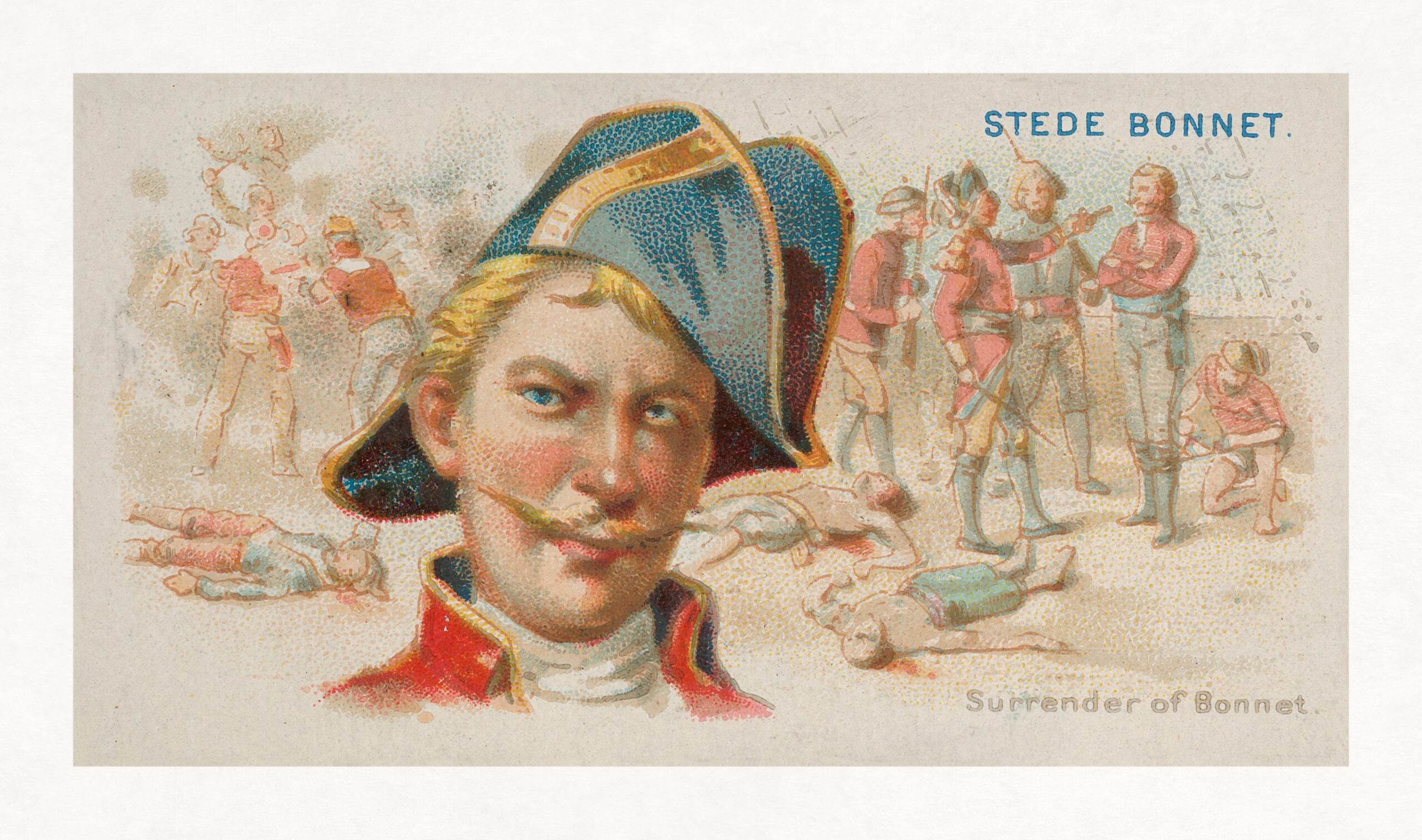
Surprisingly, instead of demanding gold or silver, Blackbeard demanded a chest of medicine to treat his disease-ravaged crew. Governor Robert Johnson agreed, delivering a 400-pound chest of pharmaceuticals in exchange for the release of the hostages.
Following this siege, Blackbeard intentionally ran the Queen Anne’s Revenge aground at Beaufort Inlet to dissolve his alliance, stranded a portion of his crew to secure a larger share of the plunder and returned to North Carolina. He accepted a royal pardon from North Carolina Governor Charles Eden, but his retirement was a ruse; he soon established a base on Ocracoke Island and quietly resumed his pirate raids.
His lawless career ended on Nov. 22, 1718. Virginia Governor Alexander Spotswood, frustrated by North Carolina’s tolerance of the pirate, sent British Royal Navy Lieutenant Robert Maynard to track him down. In a bloody, hand-to-hand battle on the decks of Maynard’s sloops, Blackbeard was finally killed after sustaining five gunshot wounds and more than twenty sword cuts. Maynard severed the pirate’s head, hanging it from his ship’s bowsprit as a warning to other outlaws, and later mounted it on a pole at the entrance of the river in Hampton, Virginia – a spot still known as “Blackbeard’s Point.”
The Folklore of Murrells Inlet: Two Jacks
Though Blackbeard’s reign of terror was over, his legacy and the tales of his crew left an indelible mark on the South Carolina coast, particularly Murrells Inlet. Positioned midway between the major ports of Charleston and Wilmington, the inlet’s labyrinth of salt marshes and tidal creeks made it an attractive resting spot for pirates to hide, repair their ships and bury their treasure.
Today, Murrells Inlet is a historic fishing village celebrated as the “Seafood Capital of South Carolina.” Visitors flock to its scenic Marshwalk to enjoy pristine views, biker bars and fresh seafood restaurants. Yet, two of the inlet’s most popular dining establishments, the Hot Fish Club and Drunken Jack’s, share a competitive historical mystery: the true origin of the naming of “Drunken Jack Island.”
The High-Society Legend
According to the Hot Fish Club, the island’s name traces back to the late eighteenth century. The original social group, the Hot and Hot Fish Club, was founded on the island by wealthy planters in 1792. It was a club dedicated to gourmet food, strong drinks and festive social gatherings.
Legend has it that one of the original members was Jack Green, a heavy-set, six-foot-four Revolutionary War veteran notorious for his loud presence and massive brandy intake. After long nights of drinking, Green would wander off into the dunes, only to pass out and wake up stranded on the sandy shores by the incoming tide – leading the planters to affectionately dub the spit of land “Drunken Jack Island.”
The Pirate Legend
Conversely, the management and patrons of Drunken Jack’s Restaurant tell a classic pirate tale. This legend claims that in the early 1700s, a pirate named Jack was a member of Blackbeard’s crew. Following a highly successful voyage, the pirates anchored in Murrells Inlet to celebrate, throwing a massive beach party filled with bonfires and endless casks of rum.
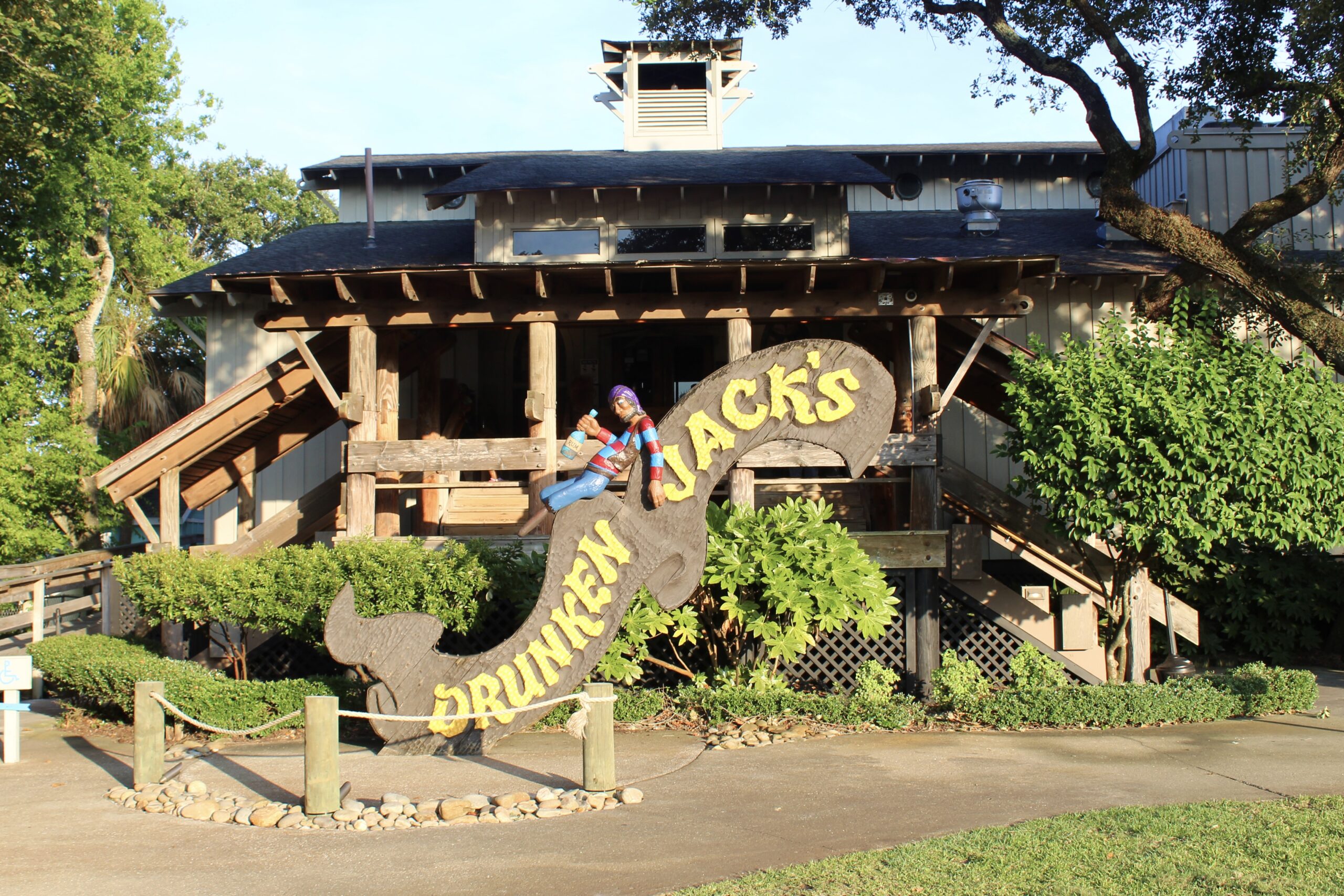
The next morning, the hungover pirates hurriedly packed their ships and sailed away, accidentally leaving a deeply sleeping Jack behind on the island. Left with no company but thirty buried casks of rum, Jack managed to survive on the island for two years. When Blackbeard’s ship finally returned to retrieve the hidden rum, the crew found only Jack’s sun-bleached skeleton, peacefully clutching an empty wooden cask.
Preserving the Coast’s Magic
While historians like Justin McIntyre point out that there is no historical documentation to verify the pirate Jack’s existence, both legends have been lovingly passed down through generations. A similar mix of myth and history surrounds the nearby “Goat Island” on the Marshwalk. While some believe pirates left goats there as a prank, the true story is modern: Al Hitchcock, co-owner of Drunken Jack’s, introduced goats to the island in the 1980s as an eco-friendly way to control overgrown vegetation.
From the daring maritime raids of Blackbeard to the competing folk legends of Murrells Inlet, the Grand Strand’s pirate history remains a captivating blend of documented fact and romantic myth. Today, the pirate sails are gone, replaced by peaceful fishing boats, families and lively coastal businesses.